Cowswap is the Revolutionary Decentralized Exchange Transforming Crypto Trading

In the rapidly evolving landscape of decentralized finance, Cowswap has emerged as a groundbreaking protocol that fundamentally changes how traders interact with cryptocurrency markets. Unlike traditional decentralized exchanges that rely on automated market makers, Cowswap introduces an innovative batch auction mechanism that protects users from various forms of value extraction while ensuring optimal trade execution.

Understanding the Core Technology Behind Cowswap

Cowswap operates on a unique infrastructure that sets it apart from conventional decentralized exchanges. The protocol utilizes what is known as Coincidence of Wants, which is where the name Cowswap originates. This mechanism allows traders to be matched directly with each other, eliminating the need for liquidity providers in many cases and resulting in better prices for all participants involved in the trading process.

The Batch Auction System Explained

At the heart of Cowswap lies its sophisticated batch auction system. Instead of processing trades immediately as they arrive, Cowswap collects multiple orders and settles them together in batches. This approach provides several significant advantages that traditional exchanges simply cannot match. The batch auction mechanism employed by Cowswap ensures that all traders within the same batch receive uniform clearing prices, creating a fairer trading environment for everyone.

When you submit a trade on Cowswap, your order enters a pool where solvers compete to find the best possible execution path. These solvers analyze multiple liquidity sources, including major decentralized exchanges like Uniswap, SushiSwap, and Balancer, to determine the optimal route for your trade. Cowswap then selects the solution that provides the best outcome for traders, ensuring maximum value is retained by users rather than being extracted by miners or arbitrageurs.

MEV Protection: How Cowswap Shields Traders

Maximal Extractable Value, commonly known as MEV, represents one of the most significant challenges facing decentralized exchange users today. MEV occurs when miners or validators reorder, insert, or censor transactions to extract value at the expense of regular users. Cowswap addresses this critical issue through its innovative architecture that makes MEV extraction practically impossible.

Eliminating Front-Running and Sandwich Attacks

Front-running attacks occur when malicious actors observe pending transactions and place their own orders ahead to profit from anticipated price movements. Sandwich attacks involve placing orders both before and after a target transaction to extract value. Cowswap effectively eliminates these attack vectors through its batch auction design. Since all orders within a batch are settled at the same price, there is no opportunity for attackers to front-run or sandwich individual transactions on Cowswap.

The protection offered by Cowswap extends beyond simple transaction ordering. By utilizing off-chain order signing combined with on-chain settlement, Cowswap ensures that your trading intentions remain private until execution. This privacy-preserving approach means that potential attackers cannot see your orders before they are settled, providing an additional layer of security that distinguishes Cowswap from other trading platforms.

The Solver Network: Competitive Execution on Cowswap

Cowswap relies on a decentralized network of solvers who compete to provide the best execution for user orders. These solvers are sophisticated algorithms that analyze market conditions across multiple venues to find optimal trading paths. The competitive nature of the solver network on Cowswap ensures that traders consistently receive excellent prices without needing to manually compare rates across different platforms.

How Solvers Optimize Your Trades

When you place an order on Cowswap, solvers immediately begin working to find the best execution strategy. They consider factors such as available liquidity across various decentralized exchanges, gas costs, slippage, and potential Coincidence of Wants matches with other orders. The solver that provides the best overall outcome wins the right to settle the batch, and Cowswap ensures this competitive process benefits traders directly.

The solver competition on Cowswap creates a marketplace for execution quality. Solvers are incentivized to continuously improve their algorithms and expand their liquidity sources to win more batches. This ongoing competition drives innovation and ensures that Cowswap users always have access to cutting-edge execution technology without needing to understand the complex underlying mechanics.

Gasless Trading Experience with Cowswap

One of the most user-friendly features of Cowswap is its gasless trading model. Unlike traditional decentralized exchanges where users must pay gas fees for every transaction, Cowswap allows traders to sign orders off-chain without any upfront gas costs. The gas fees are paid by solvers and incorporated into the overall trade execution, meaning users of Cowswap can trade without worrying about fluctuating network fees.

Sign and Forget Convenience

The gasless model implemented by Cowswap creates a remarkably smooth trading experience. Users simply connect their wallet, sign their intended trade, and let the protocol handle everything else. Cowswap manages the complexity of finding optimal execution paths, paying gas fees, and settling transactions on-chain. This approach makes Cowswap particularly attractive for traders who want professional-grade execution without technical complexity.

Furthermore, Cowswap supports limit orders natively within its protocol. Traders can set specific price targets and let their orders remain active until market conditions meet their requirements. These limit orders on Cowswap benefit from the same MEV protection and competitive solver execution as market orders, providing sophisticated trading tools to all users regardless of their technical expertise.

Cowswap Integration with Major DeFi Protocols

The reach of Cowswap extends far beyond its native interface. Many leading DeFi protocols have integrated Cowswap as their preferred trading engine, recognizing the superior execution quality and user protection it provides. This widespread adoption demonstrates the industry confidence in Cowswap technology and its ability to deliver consistent value to users across the decentralized finance ecosystem.

Aggregator of Aggregators

Cowswap functions as a meta-aggregator, sourcing liquidity not just from individual decentralized exchanges but also from other aggregators. This multi-layered approach ensures that Cowswap can access the deepest possible liquidity pools for any given trade. When you trade on Cowswap, you benefit from liquidity across the entire DeFi ecosystem, consolidated and optimized through a single, user-friendly interface.

The aggregation capabilities of Cowswap mean that traders no longer need to manually check prices across multiple platforms. Cowswap automatically compares rates from numerous sources and executes trades at the best available price. This efficiency saves time and ensures that users of Cowswap consistently receive competitive rates without extensive market research.

Security and Trust in the Cowswap Protocol

Security remains paramount in the design and operation of Cowswap. The protocol has undergone extensive auditing by leading blockchain security firms, and its smart contracts are designed with multiple layers of protection. Cowswap implements strict security measures to protect user funds and ensure reliable operation under all market conditions.

Non-Custodial Architecture

Cowswap maintains a strictly non-custodial architecture, meaning users always retain control of their assets until the moment of trade settlement. Funds are never held by Cowswap or any intermediary during the trading process. This non-custodial approach aligns with the core principles of decentralized finance and ensures that Cowswap users maintain sovereignty over their cryptocurrency holdings at all times.

The smart contracts powering Cowswap are open source and publicly verifiable. This transparency allows anyone to audit the code and verify that Cowswap operates exactly as described. The commitment to open source development has fostered a strong community around Cowswap, with developers and security researchers continuously contributing to protocol improvements and vulnerability identification.

The COW Token and Governance

Cowswap is governed by its community through the COW token, which grants holders voting rights on protocol upgrades and parameter changes. This decentralized governance model ensures that Cowswap evolves according to the collective wishes of its user base rather than centralized decision-making. Token holders can participate in shaping the future direction of Cowswap through formal governance proposals and voting mechanisms.

Community-Driven Development

The governance structure of Cowswap empowers community members to propose and implement changes to the protocol. This democratic approach has led to numerous improvements suggested and approved by actual users of Cowswap. The active governance participation demonstrates the engaged community that has formed around Cowswap and its mission to create fairer cryptocurrency trading.

Getting Started with Cowswap

Beginning your trading journey on Cowswap is straightforward and accessible to users of all experience levels. Simply visit the Cowswap interface, connect a compatible Web3 wallet, and you can immediately start trading. The intuitive design of Cowswap ensures that even newcomers to decentralized finance can navigate the platform with ease while still accessing professional-grade trading infrastructure.

Supported Networks and Assets

Cowswap supports trading on multiple blockchain networks, including Ethereum mainnet and various layer two solutions. This multi-chain presence allows Cowswap to serve traders across different ecosystems while maintaining consistent execution quality. The expanding network support demonstrates the ongoing commitment of Cowswap to accessibility and user convenience.

The range of tradeable assets on Cowswap continues to grow as the protocol expands its liquidity sources. Major cryptocurrencies, stablecoins, and numerous ERC-20 tokens are all available for trading through Cowswap. This broad asset support makes Cowswap a comprehensive solution for diverse trading needs within the decentralized finance space.

The Future of Trading with Cowswap

As decentralized finance continues to mature, Cowswap stands positioned at the forefront of trading innovation. The protocol continues to develop new features, expand to additional networks, and improve execution quality. The roadmap for Cowswap includes ambitious plans that will further enhance the trading experience and extend MEV protection to even more users across the cryptocurrency ecosystem.

The vision driving Cowswap extends beyond simple trade execution. By demonstrating that fair, efficient, and user-protective trading is possible, Cowswap is helping to establish new standards for the entire industry. The success of Cowswap proves that decentralized exchanges can provide superior experiences compared to centralized alternatives while maintaining the core values of cryptocurrency including transparency, security, and user sovereignty.

In conclusion, Cowswap represents a significant advancement in decentralized exchange technology. Through its innovative batch auction mechanism, comprehensive MEV protection, competitive solver network, and gasless trading experience, Cowswap delivers exceptional value to cryptocurrency traders. Whether you are a casual trader or a sophisticated market participant, Cowswap provides the tools and protection necessary to trade with confidence in the decentralized finance ecosystem.

Search on Youtube!

Cowswap is Revolutionizing Decentralized Trading with MEV Protection and Batch Auctions

In the rapidly evolving landscape of decentralized finance, Cowswap has emerged as a groundbreaking protocol that fundamentally changes how traders interact with decentralized exchanges. Unlike traditional automated market makers, Cowswap introduces innovative mechanisms that protect users from common pitfalls while delivering superior trading outcomes. This comprehensive guide explores everything you need to know about this revolutionary trading platform.

Understanding the Core Technology Behind Cowswap

Cowswap operates on a fundamentally different principle compared to conventional decentralized exchanges. The protocol utilizes a batch auction mechanism that aggregates multiple orders and settles them simultaneously, creating significant advantages for traders. This approach eliminates the front-running and sandwich attacks that plague traditional DEX users, making Cowswap an increasingly popular choice among sophisticated DeFi participants.

The technology powering Cowswap relies on a network of solvers who compete to find the best possible execution for user orders. These solvers analyze various liquidity sources, including other decentralized exchanges, aggregators, and private market makers, to secure optimal prices. When you submit a trade through Cowswap, you are essentially allowing professional market participants to compete for your order flow, resulting in better execution than you might achieve on your own.

How Batch Auctions Create Value for Traders

The batch auction system employed by Cowswap represents a paradigm shift in decentralized trading. Instead of executing trades immediately against a liquidity pool, Cowswap collects orders over a specific time window and then settles them all at once. This mechanism creates opportunities for coincidence of wants, where traders looking to swap opposite assets can be matched directly without requiring liquidity pool intermediation.

When two users want to make opposite trades, Cowswap can match them peer-to-peer, eliminating slippage entirely for both parties. This feature alone makes Cowswap significantly more efficient than traditional AMMs, where every trade incurs slippage based on the constant product formula. The savings generated through these peer-to-peer matches are passed directly to traders in the form of better prices.

MEV Protection: The Game-Changing Feature of Cowswap

Maximal Extractable Value, commonly known as MEV, represents one of the most significant challenges facing DeFi users today. Sophisticated actors monitor pending transactions and exploit them through front-running, back-running, and sandwich attacks. Cowswap provides robust protection against these predatory practices, safeguarding user trades from value extraction.

The architecture of Cowswap inherently prevents MEV extraction because trades are not visible in the public mempool before execution. When you sign an intent to trade on Cowswap, that intent goes directly to the solver network rather than being broadcast publicly. This privacy-preserving approach means that MEV searchers cannot see your trade and position themselves to extract value from it.

The Solver Network and Competition

Central to the Cowswap ecosystem is its competitive solver network. Solvers are specialized entities that compete to provide the best execution for user orders. Each solver employs different strategies and has access to various liquidity sources, creating a competitive marketplace that benefits traders through better prices and execution quality.

The solver competition on Cowswap ensures that users always receive the most favorable terms available across the entire DeFi ecosystem. Solvers are economically incentivized to find the best routes because they only earn fees when they win the auction by providing superior execution. This mechanism aligns the interests of solvers with those of traders, creating a virtuous cycle of improvement.

Cowswap and the Broader DeFi Ecosystem

Within the decentralized finance landscape, Cowswap has established itself as a critical infrastructure component. The protocol integrates seamlessly with major DeFi platforms and serves as a liquidity aggregator that can access pools across multiple chains and protocols. This integration capability makes Cowswap an essential tool for anyone serious about optimizing their DeFi trading.

As mentioned in various community discussions, Cowswap has become a go-to platform for traders seeking specific tokens. For instance, when users seek alternatives to platforms that may not support certain assets, Cowswap frequently emerges as the recommended solution. The protocol's ability to access deep liquidity across multiple sources makes it particularly valuable for trading less common tokens.

Token Swapping and Liquidity Access

One of the primary use cases for Cowswap involves swapping between various cryptocurrency tokens. Whether you are looking to exchange ETH for staking derivatives like rETH or seeking access to specific DeFi tokens, Cowswap provides competitive rates by aggregating liquidity from numerous sources. The platform's solver network ensures that even for less liquid trading pairs, users can find reasonable execution.

Community members have noted that Cowswap often provides better conversion rates than alternative platforms, particularly for tokens with complex liquidity situations. The protocol's ability to find optimal routes through various liquidity pools means that traders can access better prices than they might find through direct pool interactions.

The Cowswap User Experience

Using Cowswap is remarkably straightforward despite the sophisticated technology operating behind the scenes. The interface presents users with a familiar swap experience while the protocol handles all the complexity of order routing, solver competition, and MEV protection automatically. This accessibility has contributed significantly to Cowswap's growing adoption among both novice and experienced DeFi users.

When you initiate a trade on Cowswap, you sign a message indicating your trading intent rather than submitting a traditional transaction. This gasless signing process means you do not pay transaction fees upfront, and in many cases, Cowswap can bundle your trade with others to reduce overall gas costs. The protocol's fee structure is transparent and competitive with other DEX aggregators.

Gasless Trading and Fee Structures

Cowswap pioneered the concept of gasless trading in the DEX space. Users sign their trading intents off-chain, and solvers handle the actual on-chain execution. This means that if market conditions change and your trade cannot be executed profitably, you do not lose any gas fees. The solver network absorbs the execution costs and only charges fees on successful trades.

The fee model employed by Cowswap is designed to be fair and transparent. Fees are taken from the output token of your trade, making the cost structure easy to understand and predict. This approach contrasts with some platforms where complex fee structures can obscure the true cost of trading.

Cowswap Governance and the COW Token

The governance of Cowswap is decentralized through the COW token, which gives holders voting rights over protocol parameters and development priorities. The token distribution included airdrops to early users and participants in the Gnosis ecosystem, recognizing the community members who contributed to the protocol's early growth.

As noted in community discussions, GNO token holders received allocations of COW tokens as part of the protocol's launch. This distribution strategy acknowledged the connection between Cowswap and the broader Gnosis ecosystem while rewarding early supporters. The governance structure ensures that Cowswap remains responsive to community needs and priorities.

Community Engagement and Development

The Cowswap community is active and engaged, with discussions spanning technical improvements, new feature requests, and ecosystem partnerships. The protocol's development team maintains open communication channels and regularly incorporates community feedback into their roadmap. This collaborative approach has helped Cowswap evolve rapidly to meet user needs.

Community members frequently highlight the unique features that make Cowswap special, including the entertaining elements integrated into the interface. The playful design, including the signature moo sound and mini-games, creates a distinctive user experience that sets Cowswap apart from more utilitarian trading platforms. These touches demonstrate the team's commitment to making DeFi accessible and enjoyable.

Security Considerations When Using Cowswap

Security remains paramount in decentralized finance, and Cowswap has implemented multiple layers of protection for user funds. The protocol's smart contracts have undergone extensive auditing, and the architecture minimizes the attack surface by keeping user funds under their control until the moment of trade execution. This design philosophy prioritizes security while maintaining the benefits of decentralized trading.

The intent-based trading model used by Cowswap provides additional security benefits. Because users sign intents rather than transactions, they maintain more control over their trading conditions. If the market moves unfavorably or if something seems amiss, users can simply not have their intents executed without losing funds to failed transactions.

Smart Contract Architecture

The smart contract infrastructure underlying Cowswap has been designed with security as a primary consideration. The protocol uses well-tested patterns and has undergone multiple security audits to identify and remediate potential vulnerabilities. This rigorous approach to security has helped Cowswap maintain a strong track record since its launch.

Users of Cowswap benefit from the protocol's conservative approach to smart contract development. Rather than rushing to implement new features, the development team prioritizes thorough testing and auditing. This measured approach ensures that the protocol remains secure even as it evolves to meet new user needs.

Comparing Cowswap to Traditional DEX Platforms

When evaluating Cowswap against traditional decentralized exchanges, several key differences become apparent. Traditional AMMs execute trades immediately against liquidity pools, exposing users to slippage and MEV extraction. Cowswap's batch auction model eliminates these issues while often providing better prices through solver competition and peer-to-peer matching.

The aggregation capabilities of Cowswap also distinguish it from single-source exchanges. While a traditional DEX might only access its own liquidity pools, Cowswap solvers can route trades through multiple venues to find optimal execution. This flexibility means that Cowswap users benefit from the entire DeFi ecosystem's liquidity rather than being limited to a single platform.

Price Improvement and Execution Quality

Studies of execution quality have consistently shown that Cowswap delivers superior outcomes compared to direct DEX interactions. The combination of MEV protection, peer-to-peer matching, and solver competition creates systematic price improvements that benefit all users. These savings compound over time, making Cowswap particularly valuable for active traders.

The transparency of Cowswap's execution allows users to verify that they received fair treatment. All trades are recorded on-chain, and users can compare their execution prices against market benchmarks. This transparency builds trust and helps users understand the value that Cowswap provides.

Future Developments and Roadmap for Cowswap

The Cowswap team continues to innovate and expand the protocol's capabilities. Planned developments include enhanced cross-chain functionality, improved solver infrastructure, and new order types that provide users with even more flexibility. These improvements will further cement Cowswap's position as a leading DEX aggregator.

The roadmap for Cowswap reflects the team's commitment to continuous improvement and user-centric development. By listening to community feedback and monitoring industry trends, the protocol evolves to address emerging needs and opportunities. This adaptive approach ensures that Cowswap remains relevant and valuable in the rapidly changing DeFi landscape.

Cross-Chain Expansion

As the DeFi ecosystem expands across multiple blockchain networks, Cowswap is positioned to extend its benefits to new chains. Cross-chain functionality will allow users to access Cowswap's superior execution across various networks, bringing MEV protection and batch auctions to a broader audience. This expansion represents a significant growth opportunity for the protocol.

The technical challenges of cross-chain trading are substantial, but the Cowswap team has demonstrated the capability to solve complex problems. By leveraging their experience with batch auctions and solver networks, they can create cross-chain solutions that maintain the protocol's core benefits while enabling new use cases.

Conclusion: Why Cowswap Matters for DeFi Users

Cowswap represents a significant advancement in decentralized trading technology. By addressing fundamental problems like MEV extraction and suboptimal execution, the protocol delivers tangible benefits to every user. Whether you are a casual trader making occasional swaps or a sophisticated participant managing complex positions, Cowswap offers tools and protections that improve your trading outcomes.

The combination of innovative technology, strong security practices, and community-driven governance makes Cowswap a compelling choice for anyone engaged in decentralized finance. As the protocol continues to evolve and expand, its importance within the DeFi ecosystem will only grow. For traders seeking the best possible execution while maintaining the principles of decentralization, Cowswap stands as an essential platform.

The future of decentralized trading is being shaped by protocols like Cowswap that prioritize user welfare over extraction. By choosing Cowswap for your trading needs, you support an ecosystem that values fairness, transparency, and innovation. The protocol's continued success demonstrates that better alternatives to traditional trading models are not only possible but increasingly preferred by informed participants.

Search on Youtube!

After going live on Binance, COW skyrocketed, is it just because of the Trump family?

Summary: Behind CowSwap, the real "understanding king's exclusive" is the Safe and Gnosis family bundle.
BlockBeats
2024-12-30 15:23:42
Behind CowSwap, the real "understanding king's exclusive" is the Safe and Gnosis family bundle.

Author: BlockBeats

CowSwap is the DeFi token that has recently seen the most significant increase, and it is also one of Vitalik's favorite DEXs. It serves as a platform for large holders to offload their assets on-chain and is even the go-to DEX for the Trump team.

However, many people do not know that behind CowSwap lies an underrated top incubator within the Ethereum faction—Gnosis. I believe this is the true reason for the surge of $COW.

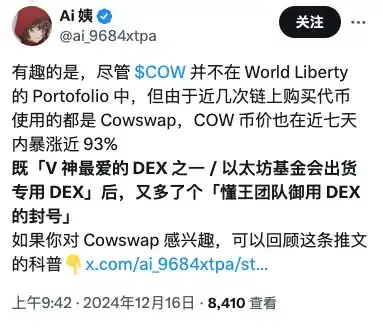
Recently, a piece of on-chain news about the DeFi project World Liberty Financial (WLFI) from the Trump team has attracted market attention in the Chinese community. Although $COW is not included in WLFI's asset list, on-chain analyst Ai Yi mentioned that recent token purchases by WLFI have utilized CowSwap. This aligns with the habit of Ethereum founder Vitalik Buterin, who frequently uses CowSwap.

COW surged after listing on Binance, is it just because of the Trump family?

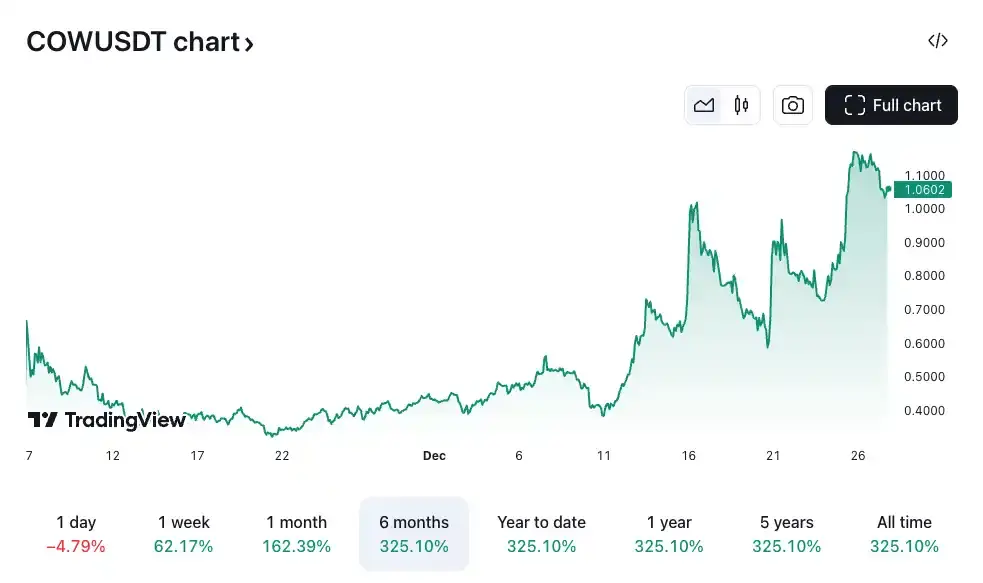
This special on-chain behavior has directly influenced market sentiment. With the dual expectations of Trump about to take office and the popularity of political concept coins, the price of $COW surged by 62% in just one week and skyrocketed by 162% within a month.

COW surged after listing on Binance, is it just because of the Trump family?

The Power Behind CowSwap is Gnosis

Gnosis is the powerful force behind CowSwap.

CowSwap originated from Gnosis Protocol V1, launched in 2020, which was the first decentralized trading platform to achieve circular trading through a batch auction mechanism. Its unique design allows all orders to share liquidity and efficiently complete settlements.

In 2021, Gnosis Protocol V2 introduced an innovative solving mechanism (Solvers), which not only significantly improved order matching efficiency but also successfully addressed the long-standing MEV (Miner Extractable Value) issue that has troubled DeFi traders. That same year, Gnosis Protocol was renamed CowSwap, becoming the aggregator we know today.

It can be said that CowSwap's rise is inseparable from the deep accumulation of the Gnosis ecosystem. In fact, the story of the Gnosis ecosystem can be traced back to 2015.

Compared to the now well-known Polymarket, Gnosis co-founder Martin Koeppelmann began researching decentralized prediction markets much earlier. In 2015, he published thoughts on the combination of MarketMaker and OrderBook on his forum, which is one of the earliest concepts for decentralized prediction markets in the industry.

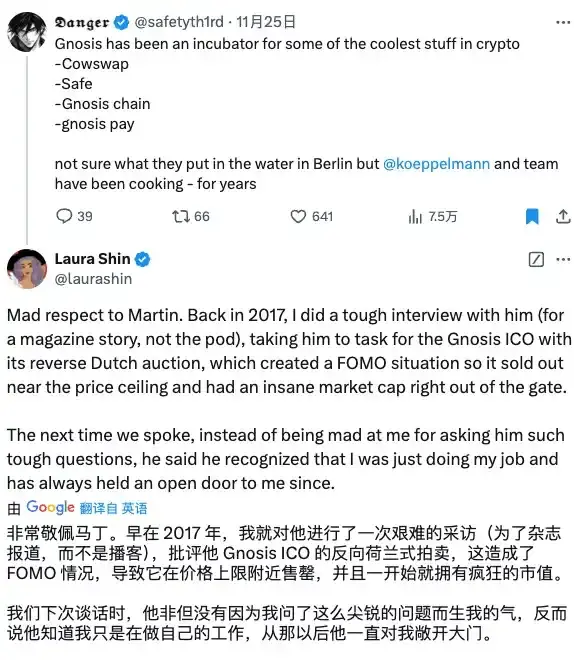
Martin Koeppelmann was also one of the earliest Ethereum developers, having joined before the DAO era. Living in Berlin, he maintained close ties with Vitalik, who was also in the Berlin office at the time.

COW surged after listing on Binance, is it just because of the Trump family?

Over the years, he has participated in many discussions within the Ethereum development community, frequently discussing L2, ZK, and the Ethereum roadmap with Vitalik. From Martin's comments on social media, one can see his level of integration into the community.

Based on this technological accumulation, Gnosis has gradually developed a complete ecosystem. From Gnosis Protocol evolving into CowSwap, Martin and his team further derived products such as Gnosis Chain, Safe, and Gnosis Pay, ultimately forming a highly collaborative ecosystem.

Thus, mutual integration is a natural outcome. The most representative example is the integration of CowSwap and Safe.

The Trump Family's Preferred Wallet

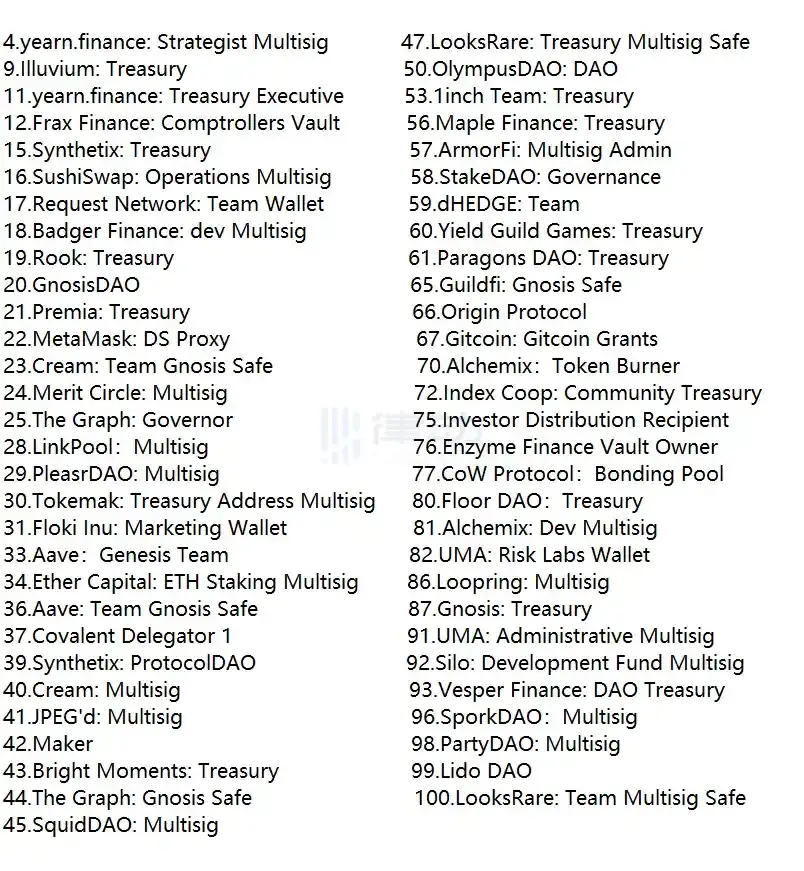
As the star product in the Gnosis ecosystem, Safe is the most popular multi-signature wallet in the Ethereum ecosystem and is used by large holders. When Safe issued tokens this year, the top 100 addresses for the airdrop were almost entirely project teams or institutions.

COW surged after listing on Binance, is it just because of the Trump family?

This means that the early large holders of Safe were primarily project teams, not individual users, including OP, Polymarket, Drukula, Worldcoin, Lido, and others.

Initially, Safe's audience was more DAO and crypto project teams. However, as the crypto industry entered the next phase, traditional finance, traditional institutions, family funds, and old money began to enter the market. Given the high barriers to entry in crypto, the safest way to protect funds while engaging in on-chain crypto is through multi-signature wallets, and Safe is the choice.

Safe's design greatly enhances the security of fund management. Through a multi-signature mechanism, funds are stored in a smart contract address, and transactions can only be executed when a pre-set number of signatures (e.g., 3/10) is met. This mechanism effectively reduces the risk of single-point failure; even if one signature address's private key is leaked, it is difficult for an attacker to obtain enough signatures to complete the transaction. Additionally, during the multi-signature confirmation process, the signing operations of pre-signers do not require Gas fees, as the transaction remains in a "pending execution" state. Only the last address confirming the execution operation (e.g., transaction, transfer, etc.) needs to pay Gas. This optimization not only reduces usage costs but also makes Safe the optimal choice for institutional users and large holders.

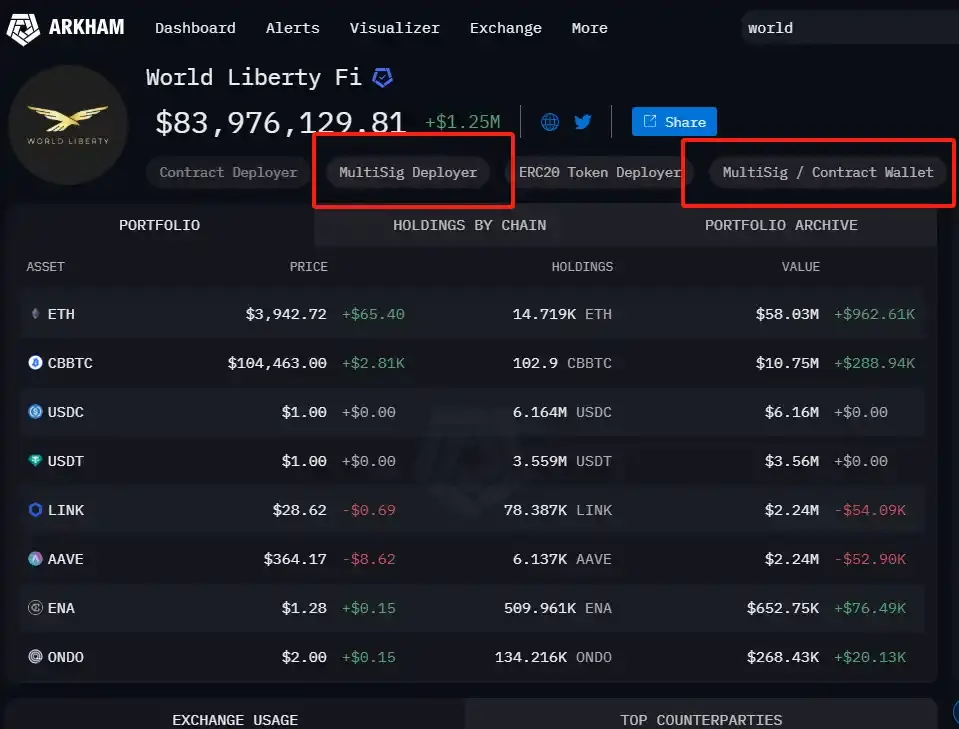
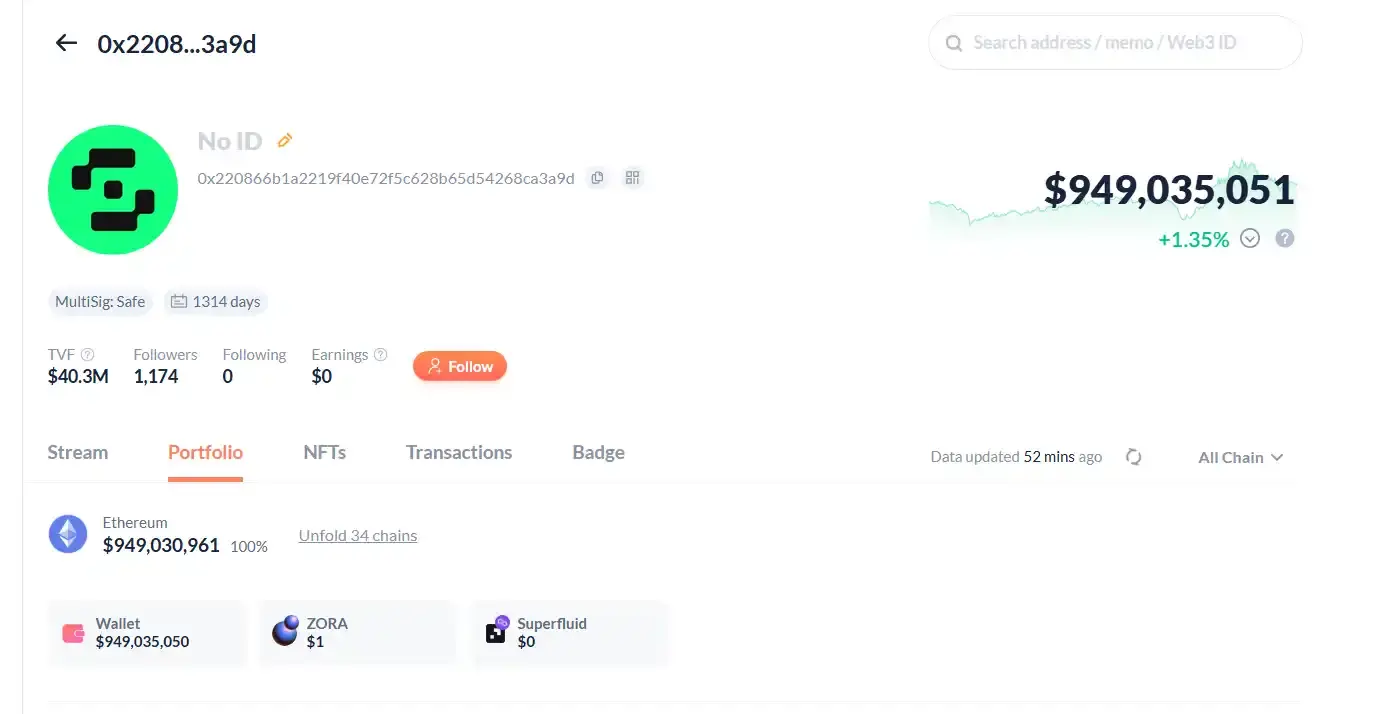
According to Safe guardians, the simplest ways to determine whether an on-chain address is a Safe wallet address are: first, the "MultiSig" label shown on ARKHAM; second, the address displayed directly below on the debank page will show "MultiSig:Safe."

Trump project's address

COW surged after listing on Binance, is it just because of the Trump family?

Vitalik's address

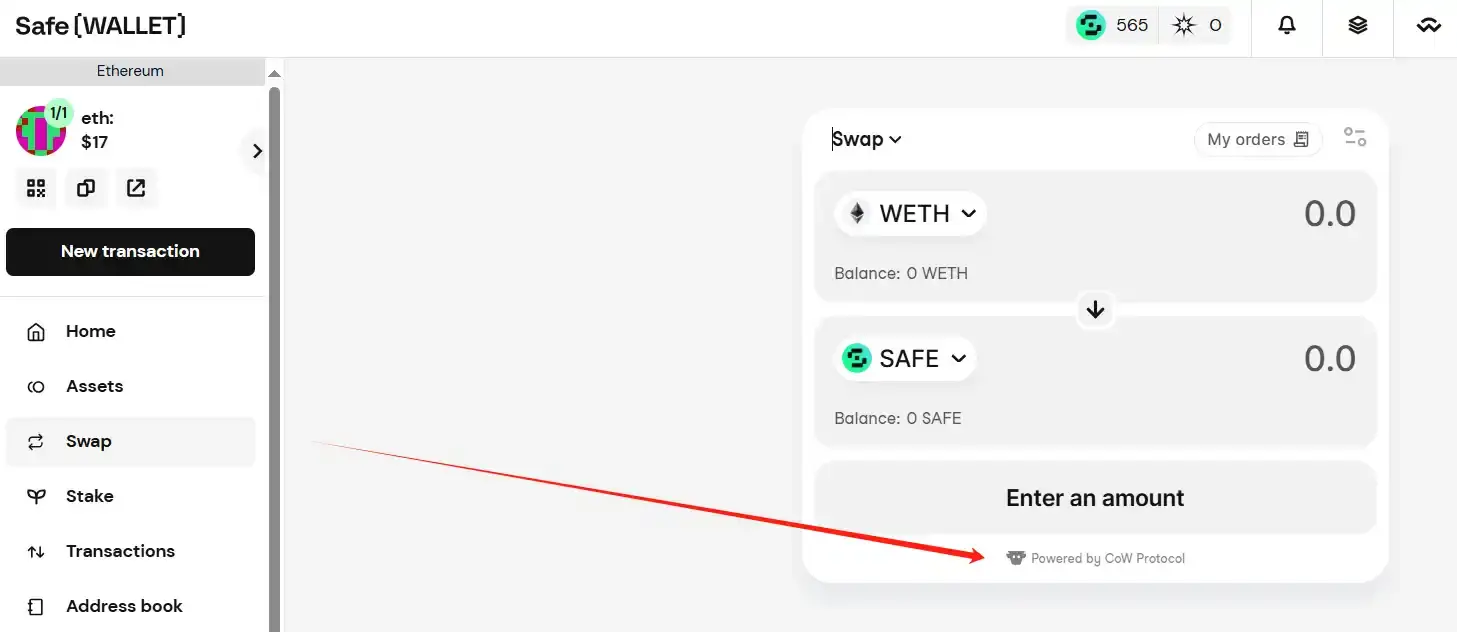
Most importantly, as part of the Gnosis ecosystem, the DEX built into Safe is CowSwap. This is why whales like Vitalik and the Trump team favor CowSwap.

COW surged after listing on Binance, is it just because of the Trump family?

From this perspective, the preference of large holders like Trump and Vitalik for CowSwap may not only be because CowSwap is an MEV-resistant aggregator DEX but also due to the synergistic effects exhibited by the Gnosis ecosystem, which is tailored to meet the real needs of large holders.

From Incubator to Investment DAO

As mentioned earlier, Gnosis has been laying the groundwork since 2015. Initially, it was a prediction market platform based on Ethereum, which later evolved into the Gnosis ecosystem, giving rise to many projects such as Gnosis Chain, Safe, CowSwap, and Gnosis Pay.

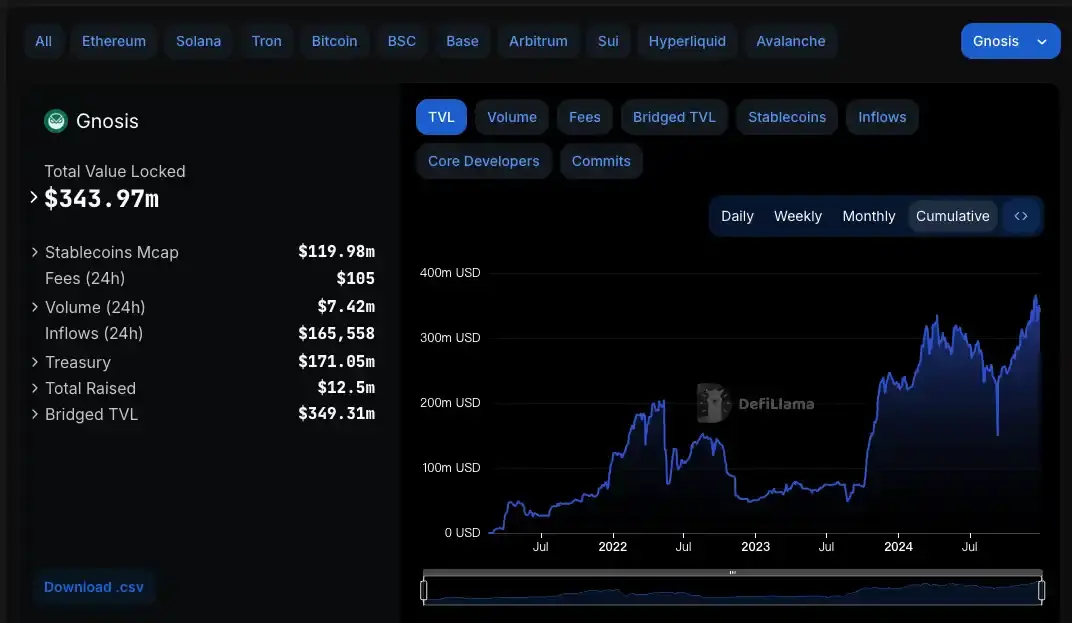
Gnosis Chain is a well-known Ethereum sidechain from the previous cycle, focusing on efficient and secure decentralized application development. According to DefiLlama data, as of the writing of this article, Gnosis Chain's total value locked (TVL) is $349.31M, which includes $71.61M in native assets and $277.7M in cross-chain bridge assets. The market cap of stablecoins reaches $119.98M, with DAI accounting for 74.07%, and trading volume remains stable.

COW surged after listing on Binance, is it just because of the Trump family?

Gnosis Chain data, source: DefiLlama

Gnosis Pay is an on-chain payment debit card that provides users and institutions with a convenient payment experience through seamless integration of blockchain technology. Along with CowSwap and the multi-signature wallet Gnosis Safe (now known as Safe).

GnosisDAO is the core governance body of the Gnosis ecosystem, promoting the incubation and development of innovative projects through decentralized autonomy. As ecological incubation flourished, GnosisDAO also began to explore investment operations.

In addition to incubating well-known projects like Safe and CowSwap, GnosisDAO began laying out in the blockchain field through its investment department GnosisVS as early as 2019, supporting over 60 startups.

Invested projects include: Monerium, an on-chain fiat currency infrastructure for Web3 builders; Naptha AI, a decentralized platform for AI workflows; and Schuman Financial, a stablecoin protocol compliant with MiCA.

This year, the investment operations further expanded. In October, GnosisDAO approved a proposal to launch a $40 million venture capital fund. GnosisDAO contributed $20 million, while the other half of the funds came from external limited partners (LPs). This dual structure not only increases the fund's capital size but also creates more opportunities for external collaboration.

The fund, named GnosisVC Ecosystem, will prioritize investments in projects engaged in the tokenization of real-world assets (RWA), decentralized infrastructure, and financial payment channels.

What Makes CowSwap Strong?

It can be said that CowSwap's rise is the best embodiment of the collaborative efforts of the Gnosis ecosystem, but this does not mean that CowSwap itself has not created a new paradigm.

To be more specific, CoW Protocol is a decentralized trading protocol, while CowSwap is a DEX built on CoW Protocol, serving as its front-end interface, allowing users to interact with CoW Protocol through CowSwap.

As a front-end application of CoW Protocol, CowSwap further amplifies the advantages of the protocol. It is referred to as the "trading assistant" of CoW Protocol, a Meta DEX aggregator that can switch between multiple AMMs and other aggregators to help users find the best prices currently available in the market. Unlike traditional DEXs that require users to compare prices themselves, CowSwap's mission is to eliminate cumbersome operations through intelligent matching, ensuring that transactions are completed in the most favorable manner. From this perspective, CowSwap addresses a long-standing pain point faced by DeFi users: the front-end dependency issue.

Is the Ultimate Solution to MEV Intent?

Miner Extractable Value (MEV) has long been a significant issue for traders. MEV refers to the additional value extracted by miners or other traders from ordinary users' transactions by manipulating transaction order or inserting transactions. According to a report by Galaxy Digital, MEV bots have extracted as much as $300 million to $900 million in user profits on the Ethereum network alone.

This is very unfriendly to large holders and whale traders. Even Ethereum founder Vitalik Buterin himself has been troubled by being "sandwiched" frequently, causing significant headaches. Therefore, the MEV issue is one of the most concerning problems for Vitalik during the development of Ethereum, and he often mentions it in various speeches and Ethereum roadmaps.

CowSwap effectively addresses this issue.

In traditional DeFi interactions, users' operations (such as asset bridging, swapping, staking, and withdrawals) directly interact with on-chain contracts. This design is not only complex but also exposes users' transaction needs, making them easy targets for MEV bots. Therefore, CoW Protocol fundamentally changes this interaction model by migrating users' transaction needs from on-chain to off-chain processing. This solution is called "off-chain preprocessing," which is more commonly known as "intent trading."

The intent process is essentially an off-chain preprocessing black box, where users' intents are placed in an "invisible" preprocessing center. After collecting and preprocessing users' transaction needs, CowSwap introduces third-party "solvers" off-chain to match and process transactions. This mechanism brings multiple benefits, significantly reducing users' direct exposure to on-chain risks, optimizing the protocol's liquidity management, and making user transactions more efficient, secure, and private.

To be more specific, through intent narrative, CoW Protocol has designed three core protective mechanisms against MEV:

  1. Unified Clearing Price Batches

CoW Protocol introduces a "unified clearing price" mechanism. When the same token pair (e.g., ETH-USDC) is traded multiple times in a batch, all assets will be cleared at the same market price. This mechanism makes transaction order irrelevant, fundamentally eliminating the possibility for MEV bots to profit from reordering transactions. More importantly, this mechanism also addresses the price inconsistency issues caused by the constant function market maker (CFMM) model in traditional AMMs (like Uniswap), providing users with a fairer trading environment.

  1. Delegated Trade Execution

Users' trades are executed by guaranteed third-party solvers, avoiding direct exposure to on-chain MEV risks. Solvers must ensure that the transaction price is not lower than the price signed by the user while optimizing liquidity through off-chain matching or private market making. This design not only reduces users' price risks but also significantly improves transaction execution efficiency.

  1. Demand Coincidence Model

Compared to traditional automated market makers (AMMs) or centralized limit order books (CLOBs), CoW Protocol's advantage lies in its core auction mechanism. This mechanism allows multiple trades to occur simultaneously, akin to an efficient large market promotion. In this event, those who can find the best matches will reap the greatest benefits. This is known as the "coincidence of wants (CoWs)," which is also the origin of CoW Protocol's name, cleverly spelling out "cow."

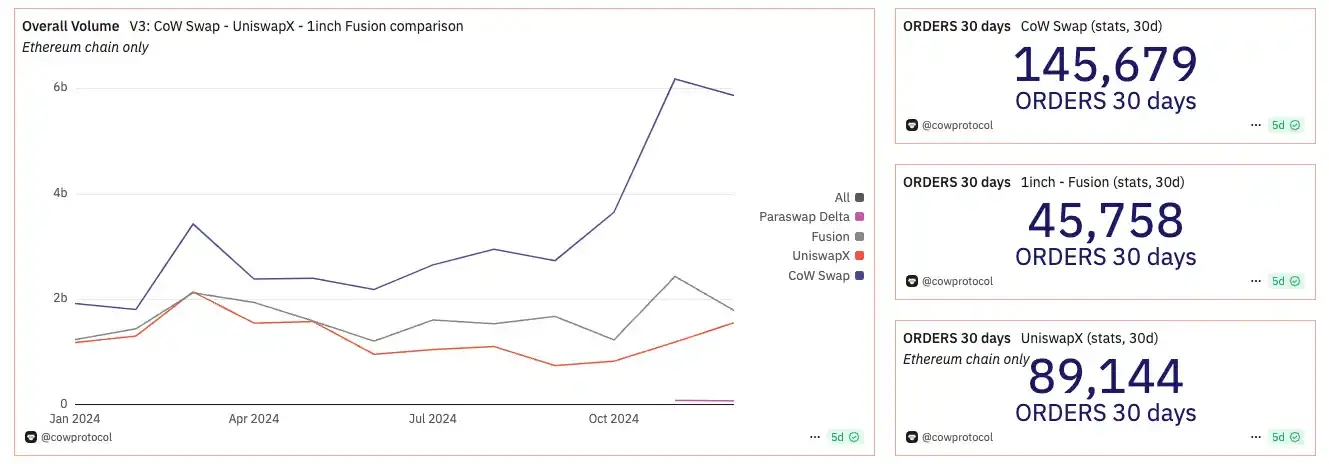
Thus, driven by the Gnosis ecosystem's flywheel and CowSwap's product push, CowSwap has seen a rapid increase in trading volume on the Ethereum chain over the past 30 days.

COW surged after listing on Binance, is it just because of the Trump family?

The Past Grievances with Uniswap

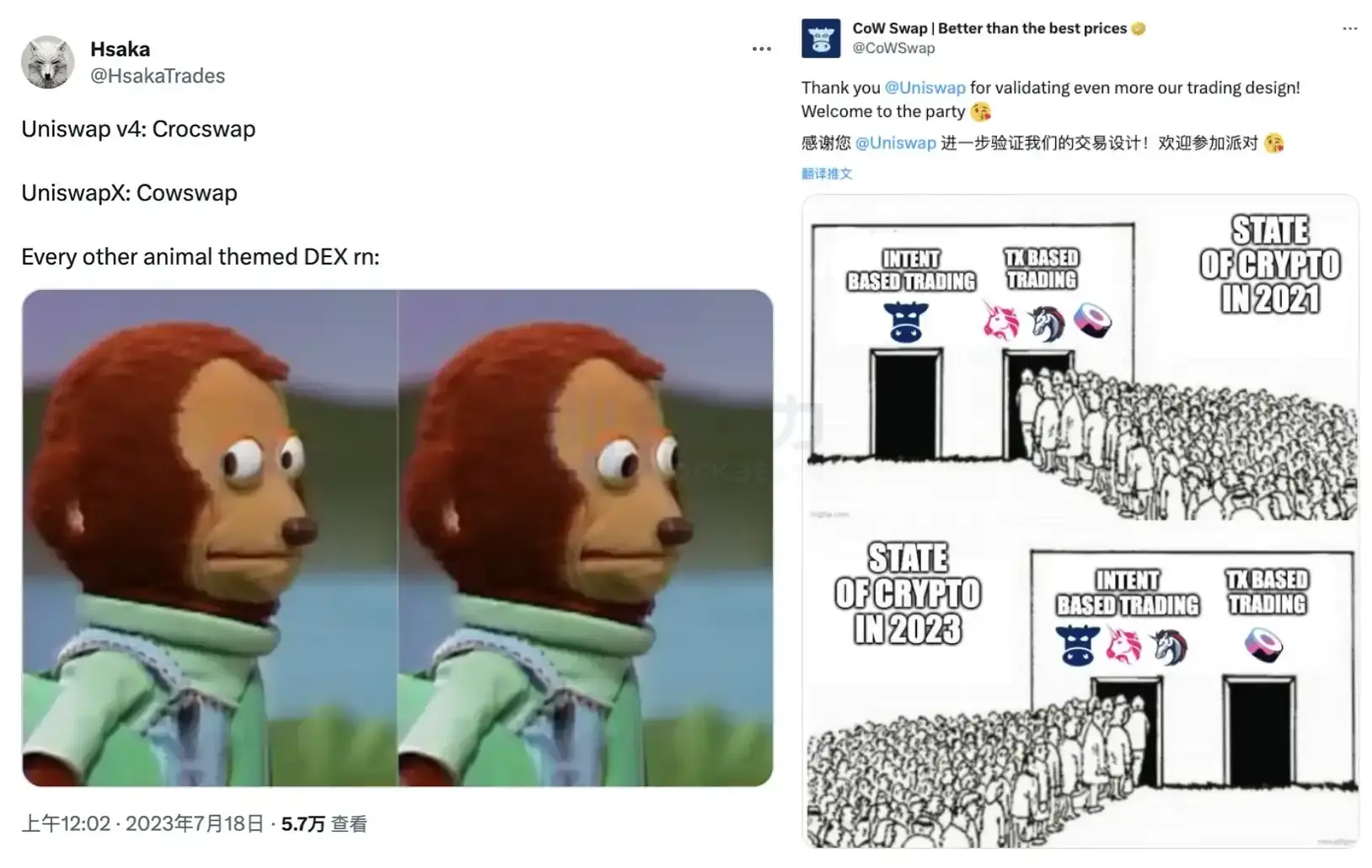
Many people do not know that CowSwap has some past grievances with Uniswap. Last year, the DEX leader Uniswap announced UniswapX, which was embroiled in a CowSwap plagiarism controversy.

After Uniswap announced version V4, it quickly announced the launch of UniswapX, but the community was very dissatisfied with UniswapX, with many questioning, "What is the difference between UniswapX and CowSwap?" Some even jokingly said, "UniswapX should thank the open-source spirit of the crypto industry."

COW surged after listing on Binance, is it just because of the Trump family?

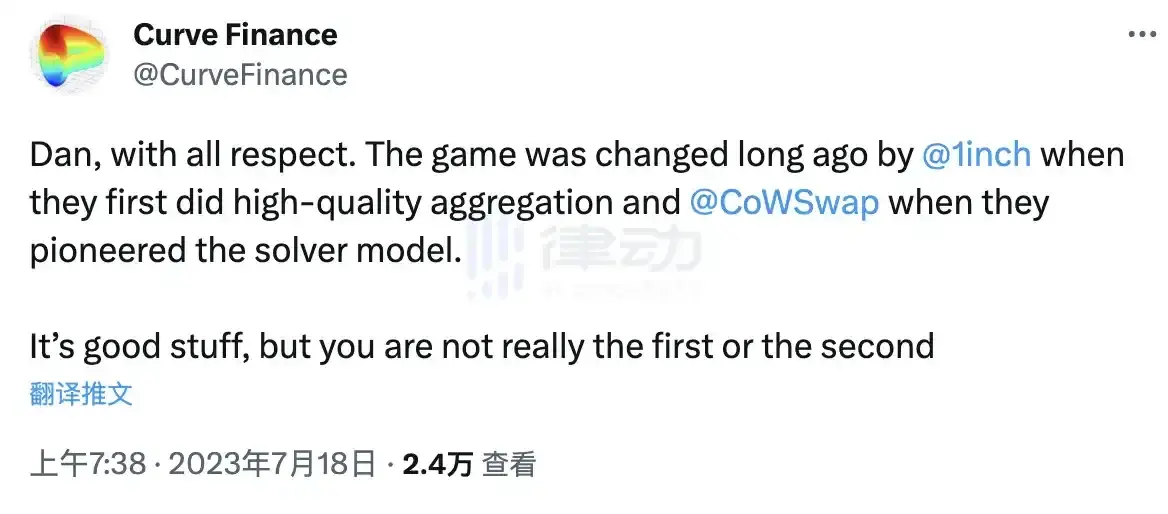
The official Curve Finance account directly commented, "To be frank, the rules of the game changed long ago: when 1inch first performed high-quality aggregation, when CowSwap launched the Solvers model. UniswapX is good, but it is not the pioneer, nor even the second player."

COW surged after listing on Binance, is it just because of the Trump family?

This public pressure posed a significant challenge for Uniswap. To shake off the title of "Tencent of the DEX world," two months ago, Uniswap Labs launched the Ethereum Layer 2 network Unichain based on OP Stack, managing to "score a small victory."

One of the major innovations is that Unichain innovated the MEV revenue distribution mechanism, using Trusted Execution Environment (TEE) to directly distribute part of the MEV revenue to users or liquidity providers (LPs), achieving a fairer value-sharing model.

Additionally, MEV revenue is proportionally injected into validator and user reward pools. This mechanism not only reduces the participation risks for LPs but also encourages more users to engage in ecosystem building.

Wintermute "Riding on a Rainbow" Arrives

Looking at it this way, CowSwap's product is good, but there are many ways for useful products in the crypto space to "die." Few can make it onto top trading platforms, and even fewer can rise by 162% in a month.

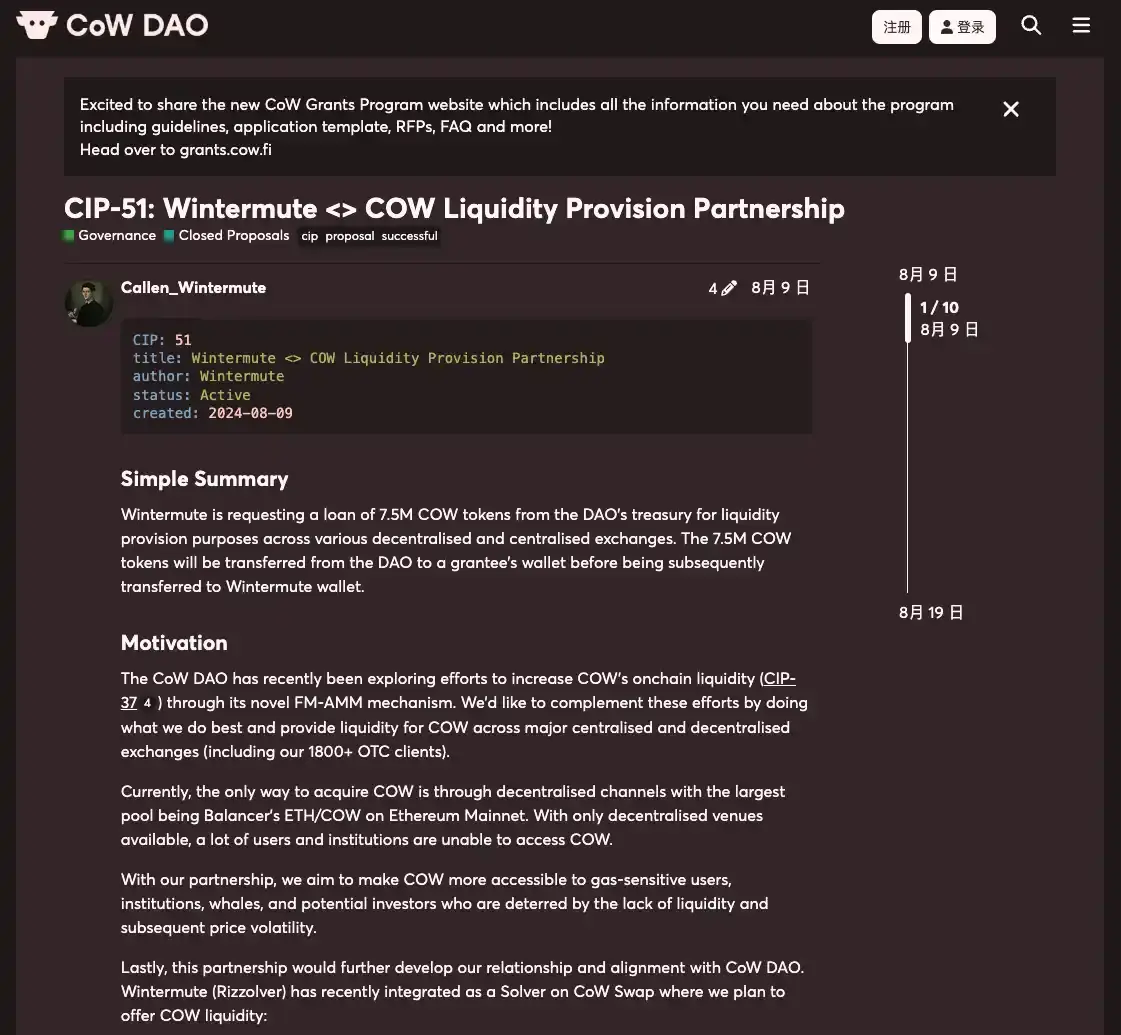
If we turn back the clock four months, we will find that the beginning of the price increase of $COW coincided with the collaboration with Wintermute.

Initially, to increase on-chain liquidity, CoW DAO proposed to allocate 10 million $COW tokens to inject market liquidity for ETH/COW. This proposal included an innovative strategy: part of the $COW tokens would be converted into ETH and injected into a brand new Function Maximizing AMM (FM-AMM) liquidity pool along with the remaining $COW. FM-AMM differs from traditional AMMs in that it effectively eliminates most MEV attacks and the high profits of arbitrageurs while reducing risks for liquidity providers (LPs).

However, merely having on-chain liquidity was still insufficient to meet market demand; the depth of centralized trading platforms is also crucial. After all, the markets there are larger, with more money. At that time, the only way to acquire $COW was through decentralized channels, with the largest pool being ETH/COW on Balancer on the Ethereum mainnet. Without a CEX trading scenario, many users and institutions could not position themselves in $COW.

At this moment, Wintermute "riding on a rainbow" arrived.

COW surged after listing on Binance, is it just because of the Trump family?

Wintermute proposed to borrow 7.5 million $COW tokens from CoW DAO's treasury to support liquidity on decentralized and centralized trading platforms. This proposal received strong support from the community and officially opened a new chapter for $COW liquidity.

As a leading market maker in the crypto industry, Wintermute excels at establishing efficient markets between centralized and decentralized trading platforms. Its founding team previously worked at the traditional financial giant Optiver, possessing rich experience in market depth management.

During the months of collaboration, Wintermute provided depth market support for COW with ETH and other trading pairs, ensuring liquidity and providing a stable trading environment for DeFi aggregators (such as CowSwap, UniswapX, and 1inch). Meanwhile, Wintermute offered large trade support for institutions in the OTC (over-the-counter) market, further expanding the user base for $COW.

This bidirectional market-driving effect directly propelled the price of $COW to soar.

Even in the second month of Wintermute's market-making, Coinbase announced that it would include $COW in its listing roadmap and launched COW perpetual contracts three months later. Since then, $COW has successively landed on major top trading platforms, with Binance following closely behind, launching the COW/USDT spot trading pair.

These are the true reasons I believe $COW surged by 162% in a month.

The Flywheel Effect Between the Gnosis Ecosystem and Ethereum

From a broader public chain perspective, during a bull market, the Solana ecosystem, which Wall Street bets on, has grown rapidly, while Ethereum appears somewhat fatigued. However, from the on-chain dynamics of the Trump team's WLFI project, it seems that Solana still has significant growth potential in serving institutional large holders, and the performance of multi-signature products is difficult to match the deep accumulation of Ethereum.

Although there are multi-signature products on the Solana chain, the assets they manage are not even on the same scale.

Taking Squads, the multi-signature protocol managing the most assets on Solana, as an example, its managed funds currently amount to about $170 million. In contrast, Safe within the Gnosis ecosystem manages assets totaling a staggering $89 billion.

More importantly, the products of the Gnosis ecosystem not only boast impressive scales but also form a powerful ecosystem capable of serving institutions and large holders through collaboration and deep integration. The security of Safe, the efficiency of CowSwap, and the convenience of Gnosis Pay collectively help Ethereum "catch its breath" in this round of public chain competition.

Moreover, and more importantly, the products of the Gnosis ecosystem have formed a good ecological circle to serve institutions and large holders through project collaboration, helping Ethereum "catch its breath" in this round of public chain race.

It is this synergistic effect that has built the flywheel effect between the Gnosis ecosystem and Ethereum.

ChainCatcher reminds readers to view blockchain rationally, enhance risk awareness, and be cautious of various virtual token issuances and speculations. All content on this site is solely market information or related party opinions, and does not constitute any form of investment advice. If you find sensitive information in the content, please click "Report", and we will handle it promptly.